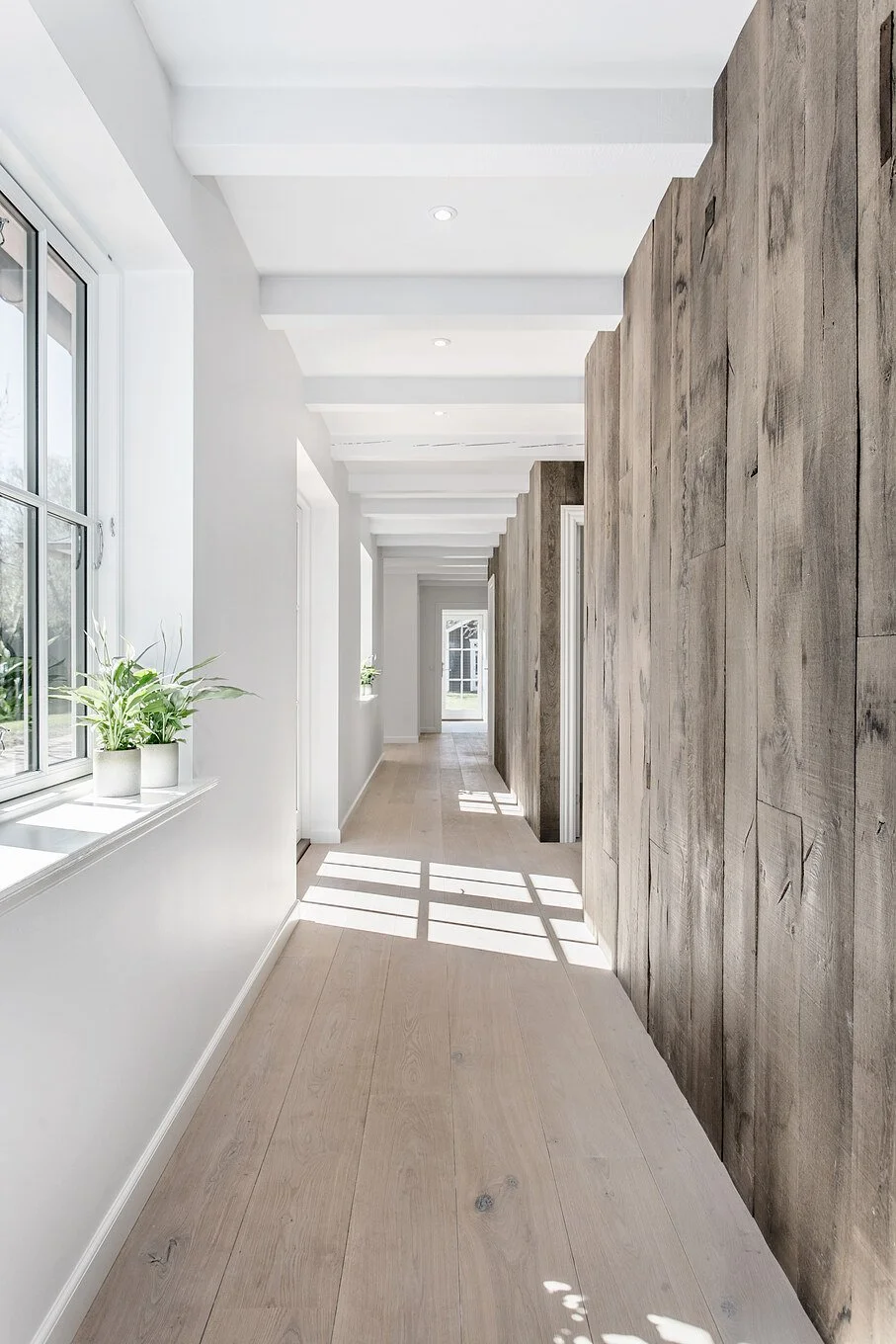
What to Expect from Reclaimed Oak
Our reclaimed oak comes from old European buildings and has already served a purpose for generations. It carries the marks of how it was originally cut, used and weathered.
It is not uniform timber. Size variation, old holes, cracks, worn edges, knots and differences in colour should all be expected. The amount of character varies from piece to piece and depends on the finish selected.
Size and shape
Much of this oak was cut and shaped by axe for buildings more than 200 years ago. They didn’t work to the standard measurements we use today, so you can’t expect every original piece to be straight, square or exactly the same size.
The width and thickness can vary along a piece, and faces may be uneven or tapered. Original rustic timber retains more of this variation. Band-sawing or dressing can create more consistent dimensions, but removing material also changes the original surface and character.
If your project requires precise finished dimensions, let us know before ordering so we can discuss what is achievable.
Peg holes and old fixing holes
Peg holes, nail holes and other fixing holes remain from the timber’s previous use. You may also see old joints, notches or cut-outs where pieces were connected in the original building.
These features vary in size and position. Some pass right through the timber, while others are only visible on one face. Cutting or processing may reveal holes that weren’t visible on the original surface.
Checking and cracks
Checking refers to cracks that develop as timber dries and moves over time. Reclaimed oak may have surface checks, deeper cracks or splits at the ends.
The extent varies between pieces, and some checking may become more noticeable after cutting or processing. Further movement or checking can also occur as the oak adjusts to its new surroundings.
If cracks are a concern for your intended use, discuss this with us so we can consider them when selecting the timber.
Old insect holes
Some pieces have old insect holes or channels from their previous life. These may appear as small holes on the surface or become more visible when the timber is cut, band-sawn or dressed.
Naturally worn edges
Original edges may be rounded, worn, chipped or irregular. Some pieces have waney edges, where the timber follows the natural outline of the tree rather than a straight, square edge.
Keeping these edges retains more of the original appearance. Creating straight edges requires further cutting and reduces the usable width or thickness.
Knots and grain
Knots and changes in grain are natural features of oak. Knots may be sound, cracked or open, and some pieces may have voids where part of a knot has fallen out.
You should expect differences between boards and beams, even when they are selected for the same project.
Colour variation
Reclaimed oak varies in colour between pieces and across individual faces. Its appearance reflects the original timber, age, weathering and previous use.
An original weathered face can look quite different from a freshly cut face on the same piece. Band-sawing, dressing, sanding and applying oil or other finishes will also change its appearance.
Samples and photographs show examples of the timber, but cannot represent every piece or guarantee an exact colour match.
Discuss your requirements before ordering
Knowing how the oak will be used helps us select and prepare suitable timber. Please tell us the finished dimensions, quantity, preferred finish and which faces and edges will be visible.
If there are features you want to retain or limit, let us know before we quote. We can discuss selection and processing options, although reclaimed oak will always have natural variation.
For structural applications, suitability and grading need to be confirmed for the intended use with your builder or engineer.
Choosing a finish
Original rustic retains the existing surface, with more weathering, unevenness and visible signs of previous use.
Band-sawn creates a freshly sawn surface with visible saw texture. Peg holes, knots, cracks and other features may remain or be revealed during processing.
Dressed creates a smoother, more even surface. It does not remove every sign of age, and peg holes, insect holes, knots and checking may still be present.